Karryon

(oir hablar)
(Carry on – Carillon)

“I’ve heard, what other people said about the Selk’nam indians in Fireland” Music notes about and for the Selk’nam indians

After my composition ‘Hain’ about the Selk’nam Indians, it was clear to me that I had to carry on. In French, there is the ‘carillon’, the chime, an alarm signal that draws attention to disaster and breaks the silence. With my work, I also wanted to break the silence about the fate of the Selk’nam Indians.

CD Hain

Video with pictures and music

All  pieces where played during the Sunwheel project both in The Netherlands as well as in Israel 

Karryon: Shoort

1st movement – The Past
1992 (21’38”)
Radioplay
For voice, guitar and flutes.

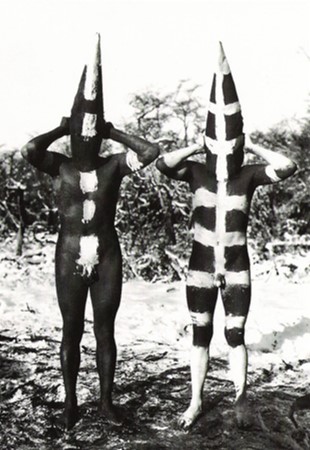
The composition “Karryon, Shoort” (the “Shoorte” are the active spirits of the gods that appear during the initiation rite called “Hain”) describes the life and the impending demise of the Selk’nam Indians of Tierra del Fuego (Argentina).

Milonga (2’26”)
The milonga frames the composition and tells the listener the story of this people. The milonga is a slow piece of singing in which the gaucho payador (impromptu poet) Nieves Cabrera accompanies himself on the guitar.

Cauquen del Fuego (9’27”)
The main part of “Shoort” is the bird composition “Cauquen del Fuego”. Birds played an important role in the lives of the Indians.

The Cauquenes, the geese and other birds fly out of the exploding ball of flame to escape the impending disaster that hangs over the Selk’nam. The birds are also imitated by the Yamana Indian Ramon Ernesto Leiva with flutes.

Kaisiya (6’21”)
The chant “Kaisiya” sung by the shaman Lola Kiepja is the centerpiece of the “fire geese”. Embedded in “Kaisiya”, the song about charming the whale, are small operatically modulated set pieces that are intended to evoke the European cultural invasion. The whale is used here as a symbol for the Selk’nam, namely extinction caused by human exploitation.

Milonga (3’24”)
Another thematic arc is drawn with the quotations of the half-Indian Segundo Arteaga, who speaks in a broken manner. This old man can hardly speak his own language anymore and only remembers his past and origin in a hazy way with sentences like “it is cold”.

Shoorts

Cauquen del Fuego

Karryon: Short

2nd movement – The Present
1992/1994 (41’48”)
Radioplay

“It shouldn’t be long until all is forgotten”

Music notes about and for the Selk’nam indians

The composition ‘Short’, the middle section of the radio work “Karryon”, is neither a literary nor a documentary radio play. Although it incorporates interviews and thus true events, ‘Short’ remains self-sufficient in its creative means and thus in its message.

“Short” is based on the following considerations and work processes:
1. Interviews
Mrs. Enriqueta de Castelumendi de Santin (La India Varela, 78 years old) and Mr. Segundo Arteaga (84 years old), the last two living Creoles (the fathers were Argentinean and Chilean respectively, the mothers Selk’nam Indians), tell about their lives and thus testify the downfall of the Selk’nam Indians (Ona’s) on Tierra del Fuego. The Salesian monk Juan Tico on the other hand describes the positive Christianisation of the Selk’nam. The soundscape consists of bird and water sounds.
Although La India Varela’s life story is very difficult and problematic, it is told in a very detached manner. Cultural differences could be the reason for this.

2. The short dramaturgy
The arrival of the white settlers at the end of the 19th century, the realisation of Don Bosco’s dream, forms the framework for the play. The decline of the Selk’nam people marks the beginning and end of the central section, which recounts the personal experiences of La India Varela. The composition concludes with a coda (Segundo Arteaga). The plot lines are linked in different ways in their chronological sequence.

3. The sounds of water
The plot of ‘Short’ refers to the use of water sounds. Water sounds in a domestic environment, e.g. washing hands, underline or interpret the intimacy of a text passage.
A sound story is told, the plot, e.g. the landing (sailing ship noises), is staged aurally.
‘Short’ synthesises water sounds using electronic means; the sound of the sea is taken out of its natural context, altered and reassembled. A unique abstract world of sound is created.

4. The bird sounds
Birds played a special role in the life of the Selk’nam. In their songs, they interpreted the voices of birds and their melodies. In ‘Short,’ the bird symbolises departure, moving away, the end of an era.

5. Cerca Diosi
At the end of ‘Short’ is the song ‘Cerca Diosi’, again sung by the shaman Lola Kepja. It is a chant she learned at the Salesian mission, the invocation ‘Close to God’.

La India Varela

Segundo Arteaga

Segundo Arteaga

Karryon: Shore

3rd movement
1992 (19’09”)
music for theater/performance

For three speakers (A, B, C),  a ship’s bell and the sound of birds and the lighthouse, with parts of “The Lighthouse at the End of the World” by Jules Verne.

The third and last part of the composition “Karryon” “Shore”, the coast, deals with the Staten Islands, which are located in the southeast of Tierra del Fuego near Antarctica. The meaning of the “Staten Islands”, discovered by the Dutch navigator Jacobo le Maire in 1615, who refers to the Dutch states when naming the islands, is treated in three levels of text. The rotating lighthouse sounds were derived from birdcalls.

At the end of the composition is the song “Mercury Sound”. With text parts of “The Lighthouse at the End of the World” by Jules Verne.

© Copyright - Michael Fahres